Omnipod® 5 for Kids and Teens


Automated insulin delivery. Tubeless freedom.
The Omnipod 5 Automated Insulin Delivery System integrates with a compatible continuous glucose monitor (CGM) to automatically increase, decrease, or pause insulin delivery to help protect against highs and lows, day and night.1,2
Long gone are the days of choosing between automated insulin delivery and tubeless freedom. Now kids, teens, and their caregivers can have the best of both worlds, all in one.
Peace of mind for parents
When your child is living with type 1 diabetes, you're often thinking ahead: monitoring glucose levels, planning for meals, preparing for school, sport, sleepovers, and everything in between.
Omnipod® 5 is designed to help simplify diabetes management through automated insulin delivery (AID), supporting your child throughout the day and night while helping you feel more confident in managing their diabetes journey.

Parents reported meaningful improvements compared to prior therapy, including:

Better sleep3
Improved sleep quality and longer sleep duration.

Greater confidence around low blood glucose4
In the Omnipod 5 pivotal study, adult users and parents of children reported feeling confident staying safe from the risk of hypoglycaemia (low blood sugar) compared to prior therapy.

Improved quality of life and mental well-being5
Reported improvements in overall quality of life and mental well-being.
“All round for the whole family – it was like a weight had been lifted off of our shoulders.”
Gill, Mother of Ella K
Podder ® since 2025
Why Omnipod is an insulin pump designed to keep up with kids
Omnipod 5 is a tubeless automated insulin delivery system that helps reduce the burden of daily diabetes management, so your child can stay focused on school, sports, play, and everything in between.
No multiple daily injections: Omnipod delivers insulin continuously for 3 days (up to 72 hours)
Waterproof†: Can be worn while swimming, bathing, or showering – no need to ever disconnect for daily activities§
Tangle-proof: No tubes to get caught when playing with friends or staying active
§ Device components including the Pod, CGM transmitter, and CGM sensor may be affected by strong radiation or magnetic fields. Device components must be removed (and the Pod and CGM sensor should be disposed of) before X-ray, Magnetic Resonance Imaging (MRI), or Computed Tomography (CT) scan (or any similar test or procedure). In addition, the Controller and smartphone should be placed outside of the procedure room. Exposure to X-ray, MRI, or CT, treatment can damage these components. Check with your healthcare provider on Pod removal guidelines.
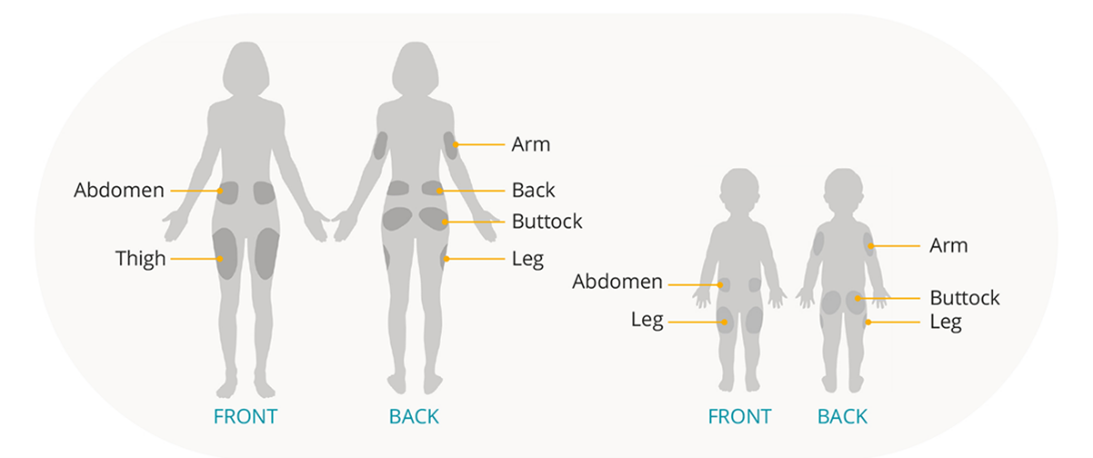
Wear the Pod with ease
The Pod can be worn almost anywhere you’d give an insulin injection, which means there are plenty of options to suit your child’s preferences.
Plus, unlike traditional insulin pumps, there’s no need to disconnect for activities like showering, swimming, or sports.
Request your free demo Pod◊ today!
The Pod Experience Kit◊ contains a non-functioning Pod for your child to try. It’s the same size and weight of a real Pod, designed to demonstrate what it feels like for your child to wear the Pod and to get a sense of how discreet it can be.
2. Sherr J. et al. Diabetes Care. 2022; 45:1907-1910. Single-arm multicenter clinical trial in 80 pre-school children (aged 2-5.9 yrs) with T1D. Study included a 14-day standard therapy (ST) phase followed by a 3-month AID phase with Omnipod 5 system. Mean time >10.0 mmol/L or >180mg/dL (12AM-<6AM) as measured by CGM in children ST vs. 3-mo Omnipod 5: 38.4% vs. 16.9%, P<0.0001, respectively. Mean time >10.0 mmol/L or >180mg/dL (6AM-<12AM) as measured by CGM in children ST vs. 3-mo Omnipod 5: 39.7% vs. 33.7%, P<0.0001, respectively. Mean time <3.9 mmol/L or <70 mg/dL (12AM-<6AM) as measured by CGM in children ST vs. 3-mo Omnipod 5: 3.41% vs. 2.13%, P=0.0185. Mean time <3.9 mmol/L or <70 mg/dL (6AM-<12AM) as measured by CGM in children ST vs. 3-mo Omnipod 5: 3.44% vs. 2.57%, P=0.0799.
3. Hood KK, et al. Pediatric Diabetes 2023. During the Omnipod 5 pivotal trial, parents of children 6-11.9 years (N=82) experienced an improvement in sleep quality survey score after 3 months of Omnipod 5 use compared to standard therapy: mean PSQI Overall Sleep Quality Subscore = 0.70 vs 1.12, respectively.
4. Hood KK, et al. Pediatric Diabetes 2023. During the Omnipod 5 pivotal trial, parents of children aged 6 - 11.9 years (N=82) and adults aged 18-70 years (N=41) experienced an improvement in hypoglycaemia confidence survey score after 3-months of Omnipod 5 use compared to standard therapy: mean HCS score = 3.59 vs. 3.34; respectively. Study funded by Insulet
5. Hood KK, et al. Pediatric Diabetes 2023. During the Omnipod 5 pivotal trial, parents of children aged 6-11.9 years (N=82) experienced an improvement in emotional distress levels and mental well-being survey scores after 3 months of Omnipod 5 use compared to standard therapy: mean P-PAID-C score = 40.7 vs. 47.4; mean WHO-5 score = 72.9 vs. 67.5, respectively.